


Real-TimeChemicalMonitoringforOrdnanceSafety
Non-Invasive. Air-Aspiration-Based. Field-Deployable.
Advanced Air aspiration based Trace Chemical Detection system for assessing ordnance stability and preventing accidents—without physical contact with stored munitions.
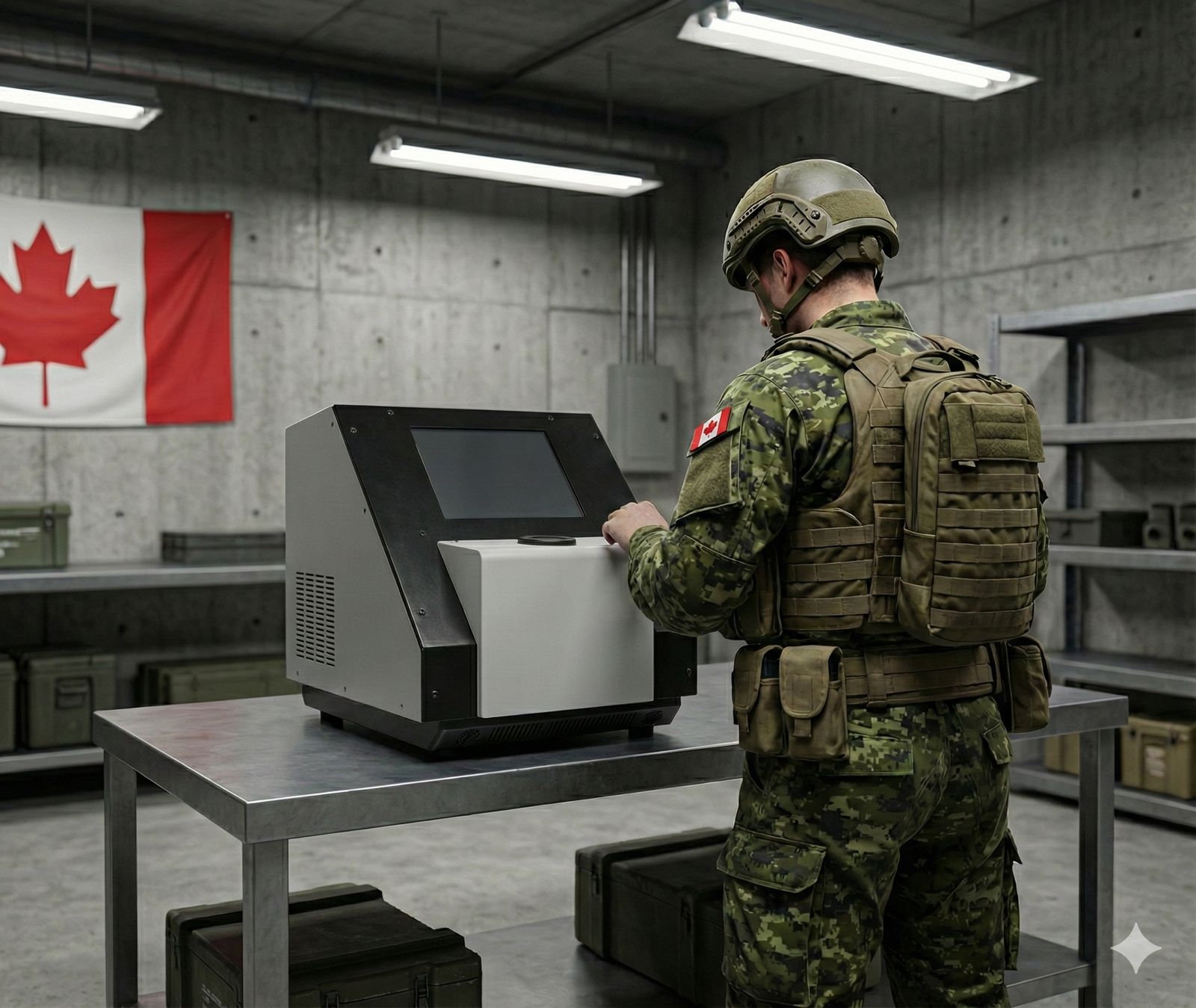
Operational Coverage
A Specialised Ordnance Safety Intelligence Company
Canada Ordnance Safety Inc. is a high-technology defence and national security company focused exclusively on ordnance safety, stability assessment, and accident prevention. We operate at the intersection of defence engineering, chemical sensing, and non-invasive diagnostic technologies.
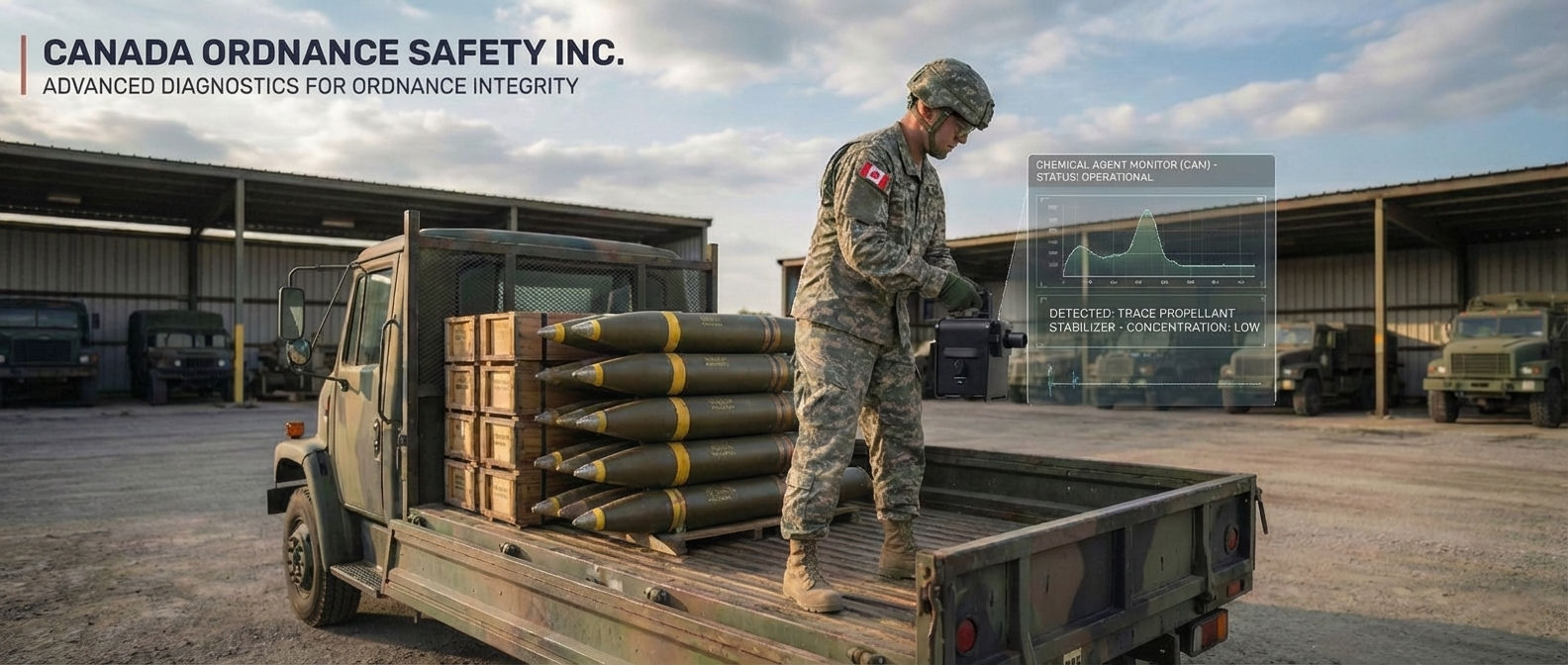
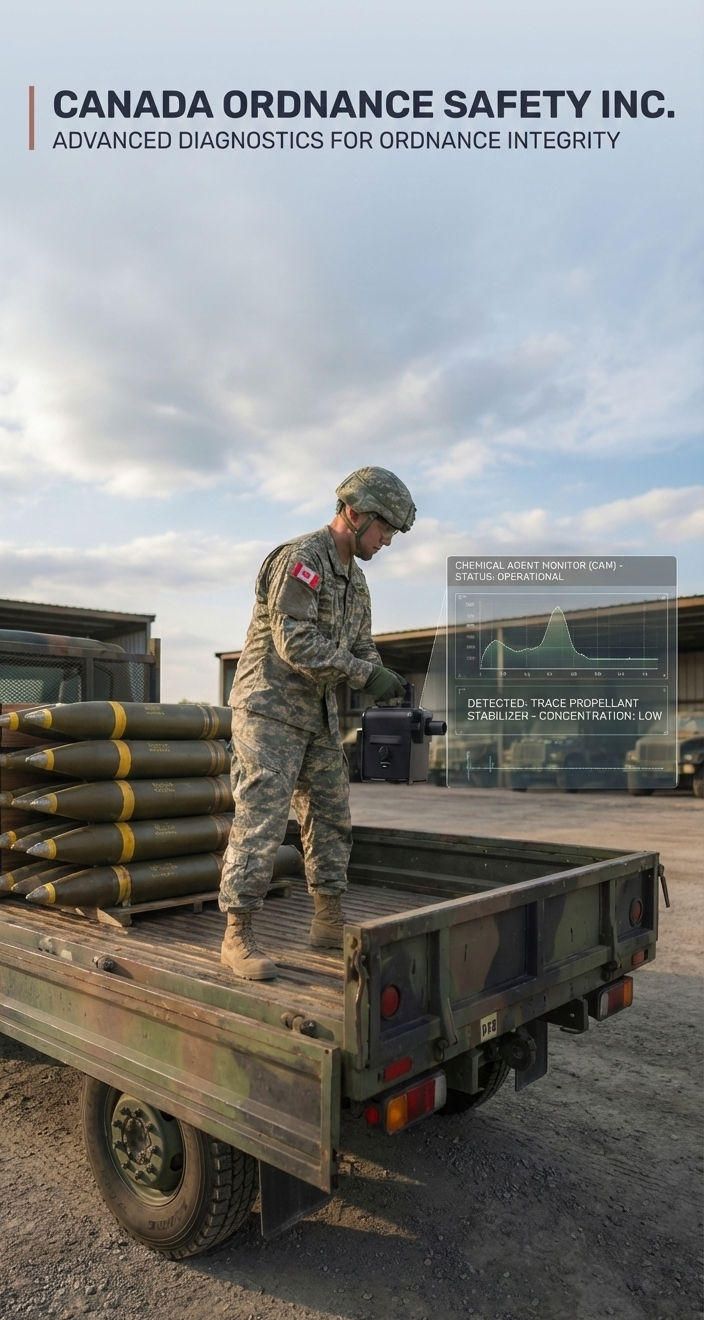
Expert Engineers Conducting Safety Assessments
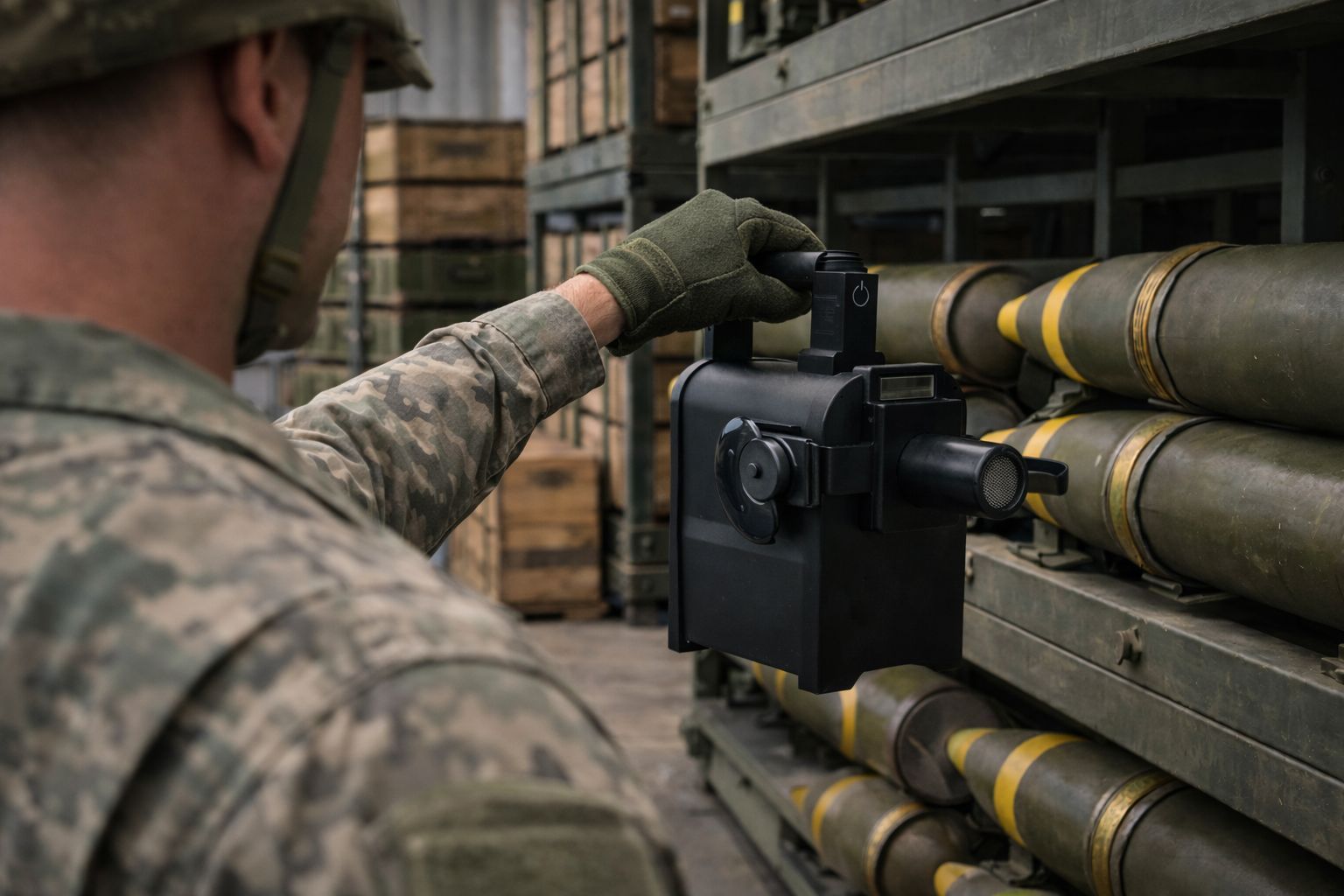
The AACTS system enables authorised military and ordnance personnel to perform rapid, non-invasive condition assessments during field operations, supporting informed go / no-go safety decisions.
Safety is not a single inspection — it’s continuous awareness.COS enables non-invasive stabilizer and degradation monitoring to support safer storage, high-risk handling phases, and transport readiness verification.Environmental sampling. Field-deployable. Decision-support focused.
Defence Engineering
Specialised expertise in ordnance safety and stability assessment
Chemical Analytics
Patented Chemical Trace Detection System
Non-Invasive Diagnostics
Environmental sampling without physical contact with ordnance
Accident Prevention
Early detection of instability indicators before failure occurs

The Core Problem We Address
Canada stores and handles large quantities of legacy ammunition, missiles and rocket motors, artillery shells, propellants, and energetic materials stored over extended periods.
Existing Challenges
Current Inspection Methods
Risk During Operations
Chemical degradation creates risk across the entire ordnance lifecycle. Without continuous monitoring, critical safety thresholds may be crossed undetected.
Our Solution
We assess ordnance safety by detecting and analysing trace chemical's in the surrounding air—non-invasively, in real time.
Ordnance Storage
Safety Assessment
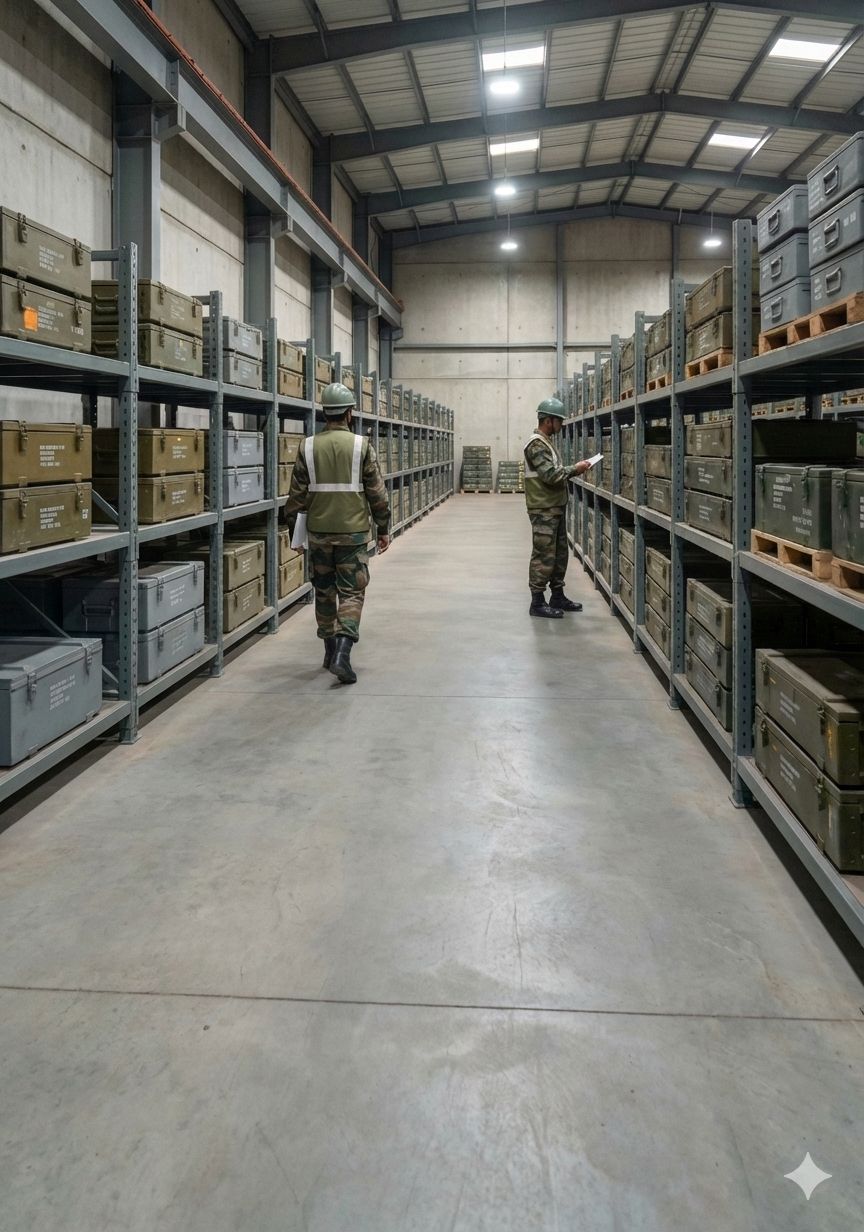
Long-term storage of ammunition and explosives presents inherent safety challenges. Our non-invasive approach provides continuous condition visibility without disrupting storage operations or compromising ordnance integrity.
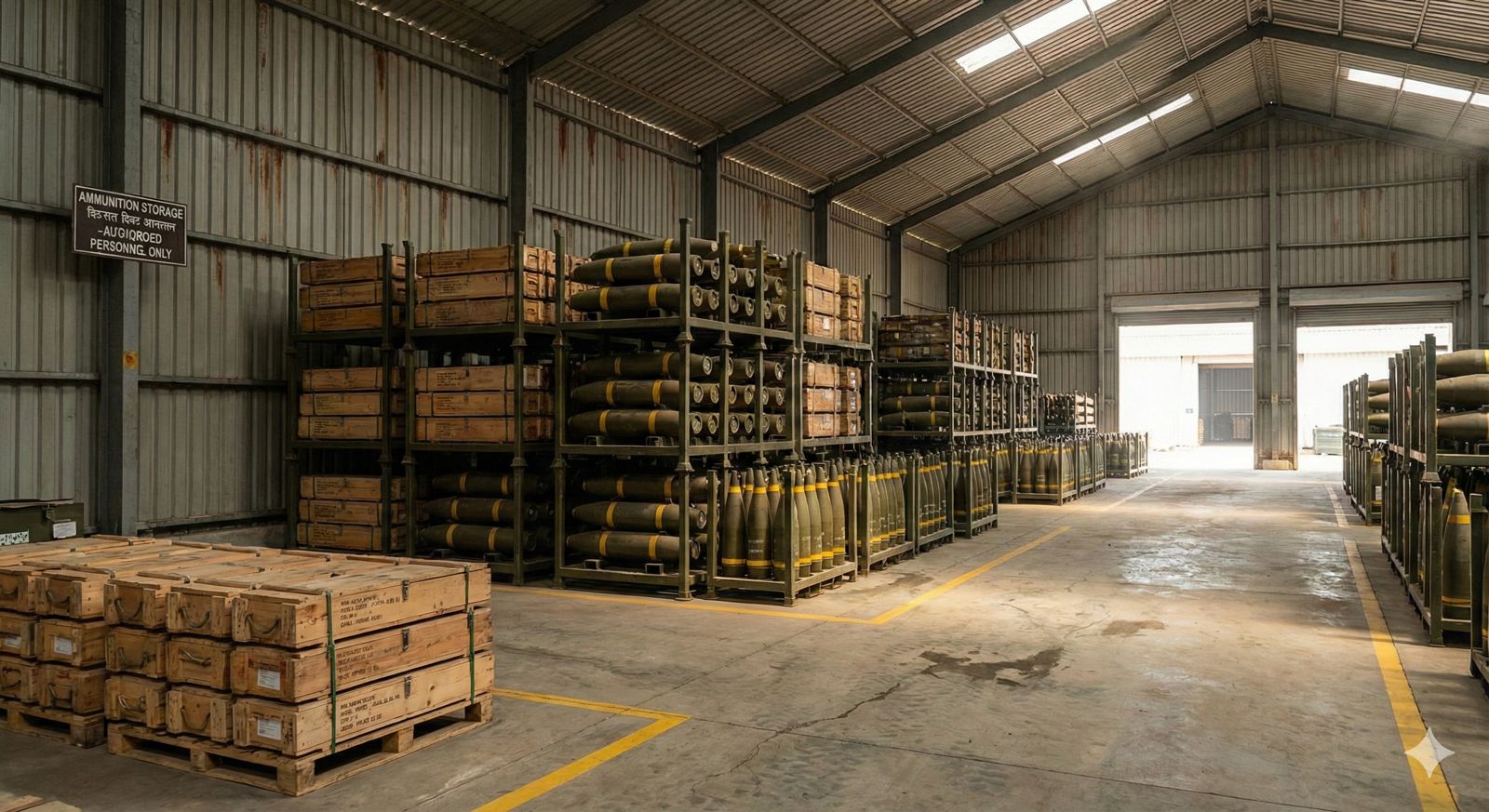
Ammunition Storage Facility
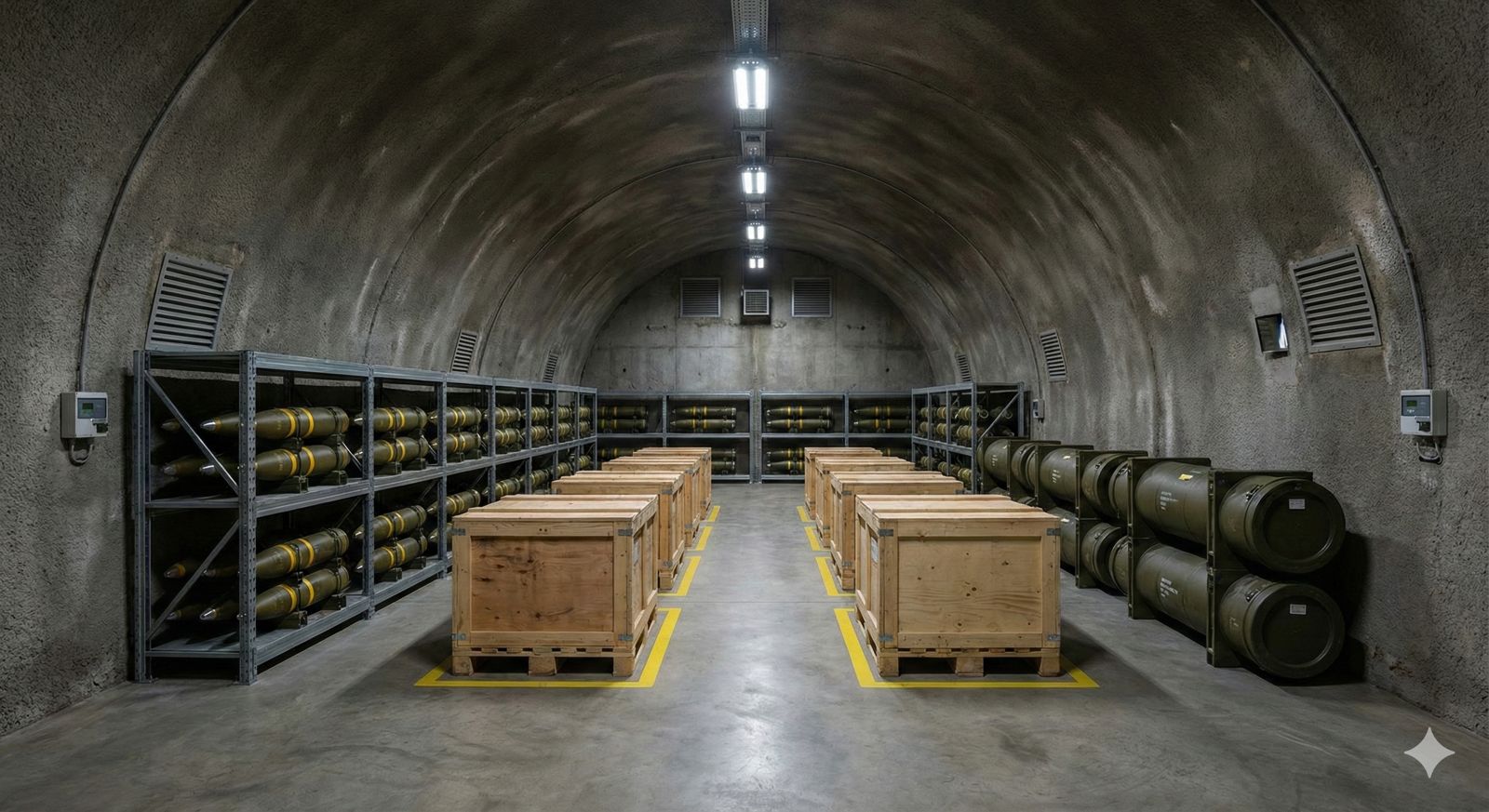
Underground Magazine Storage
The Storage Challenge
Chemical Ageing
Propellants and explosives undergo continuous chemical degradation over storage lifetime
Stabiliser Depletion
Critical stabiliser compounds are consumed as they neutralise reactive decomposition by-products
Extended Storage
Long-term storage of legacy ammunition without condition visibility increases uncertainty
Assessment Process
Storage Facility
Ammunition magazines and storage facilities housing ageing ordnance
Air Sampling
Ambient air sampling around stored ordnance without physical contact
Chemical Analysis
Trace Chemical Detection(TCD) of stabiliser markers and degradation indicators
Safety Status
Clear assessment of ordnance condition for safety decisions
Storage Facility
Ammunition magazines and storage facilities housing ageing ordnance
Air Sampling
Ambient air sampling around stored ordnance without physical contact
Chemical Analysis
Trace Chemical Detection(TCD) of stabiliser markers and degradation indicators
Safety Status
Clear assessment of ordnance condition for safety decisions
Assessment Outcomes
Early warning of chemical instability before critical thresholds
Enhanced safety margins during extended storage periods
Data-driven support for preventive safety decisions
Reduced risk of unplanned incidents in storage facilities
Our technology samples ambient air around stored ordnance to detect trace chemical linked to early degradation—without any physical contact, disassembly, or disruption to storage operations.
This positions our capability as a safety assessment service aligned with national defence requirements, designed for ammunition depots, storage facilities, and operational environments where ordnance integrity must be verified without risk.
Transportation Safety Support
Safe logistics through chemical condition awareness
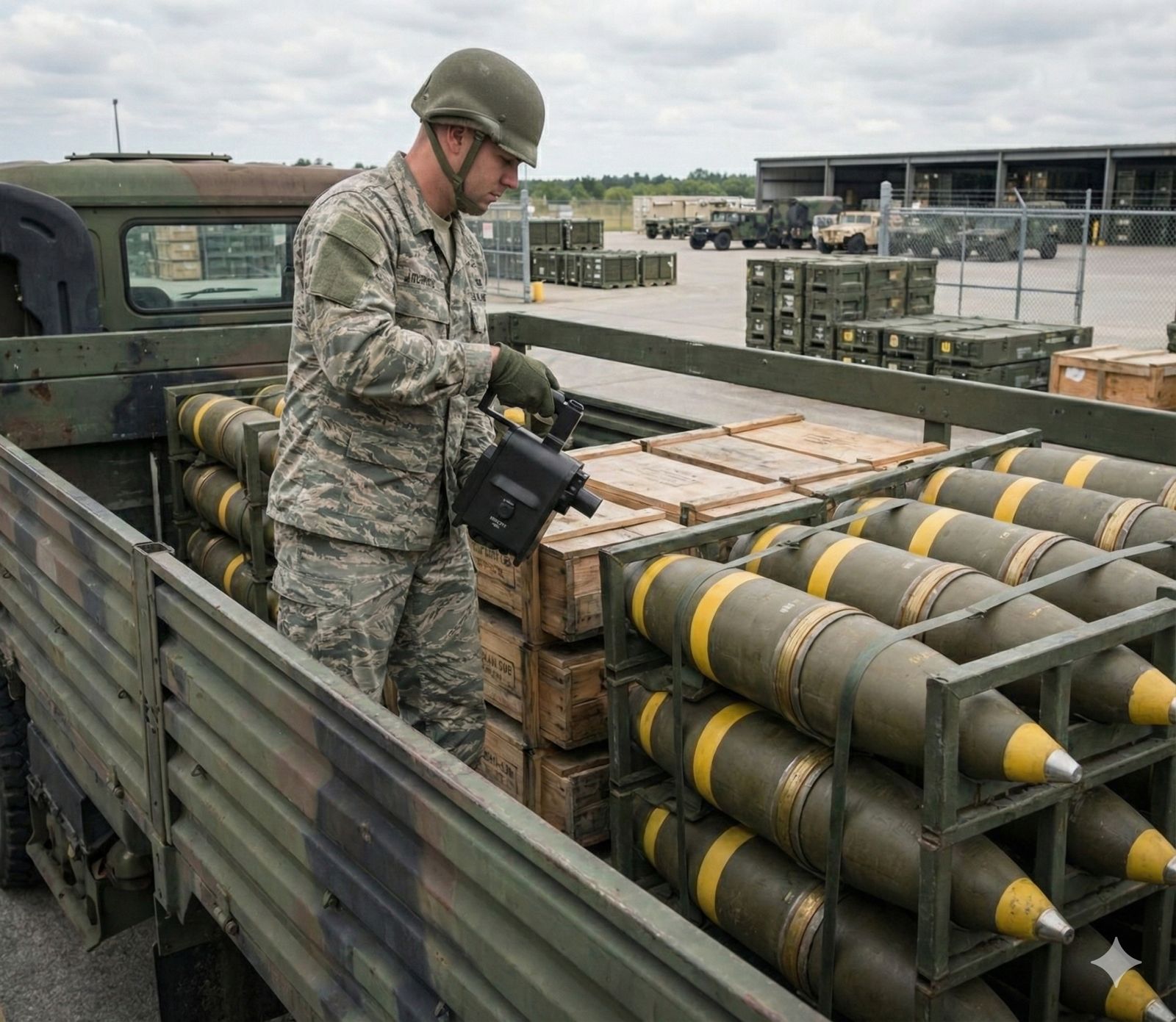
Transportation introduces mechanical stress and environmental variation that can accelerate degradation in energetic materials. Stabilizer-based monitoring supports safer logistics planning.
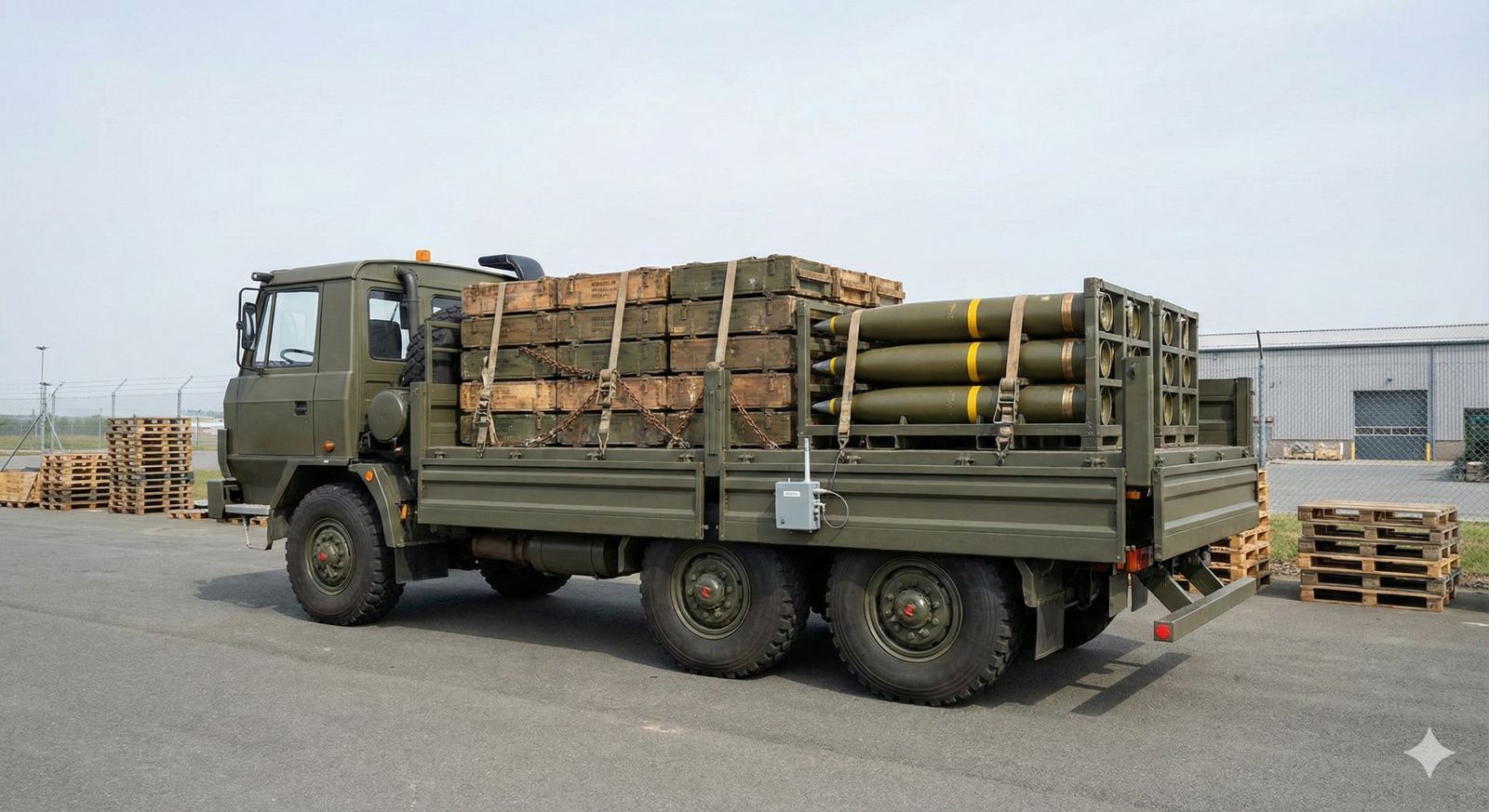
Pre-Transport Check
Condition assessment before movement
Controlled Transport
Transportation under defined safety limits
Post-Transport Verification
Assessment before storage or deployment
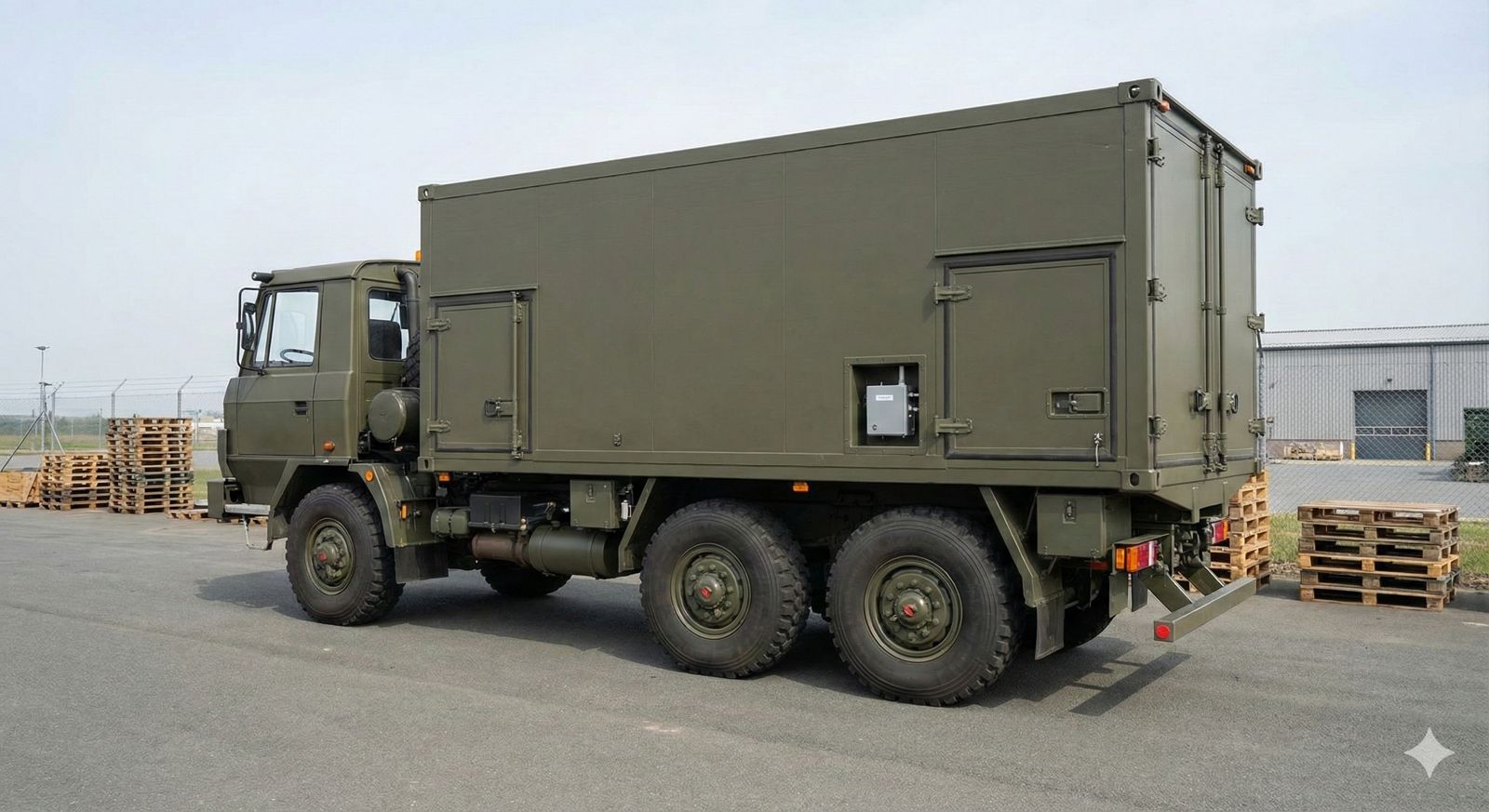
Enclosed Transport System
Important Note
Monitoring supports decision-making; it does not replace regulatory transport controls.
Periodic Condition Monitoring
Integrated monitoring for proactive safety management
Canada Ordnance Safety integrates periodic stabilizer monitoring into operational safety programs. Regular checks provide trend visibility, enabling proactive interventions aligned with safety regulations.
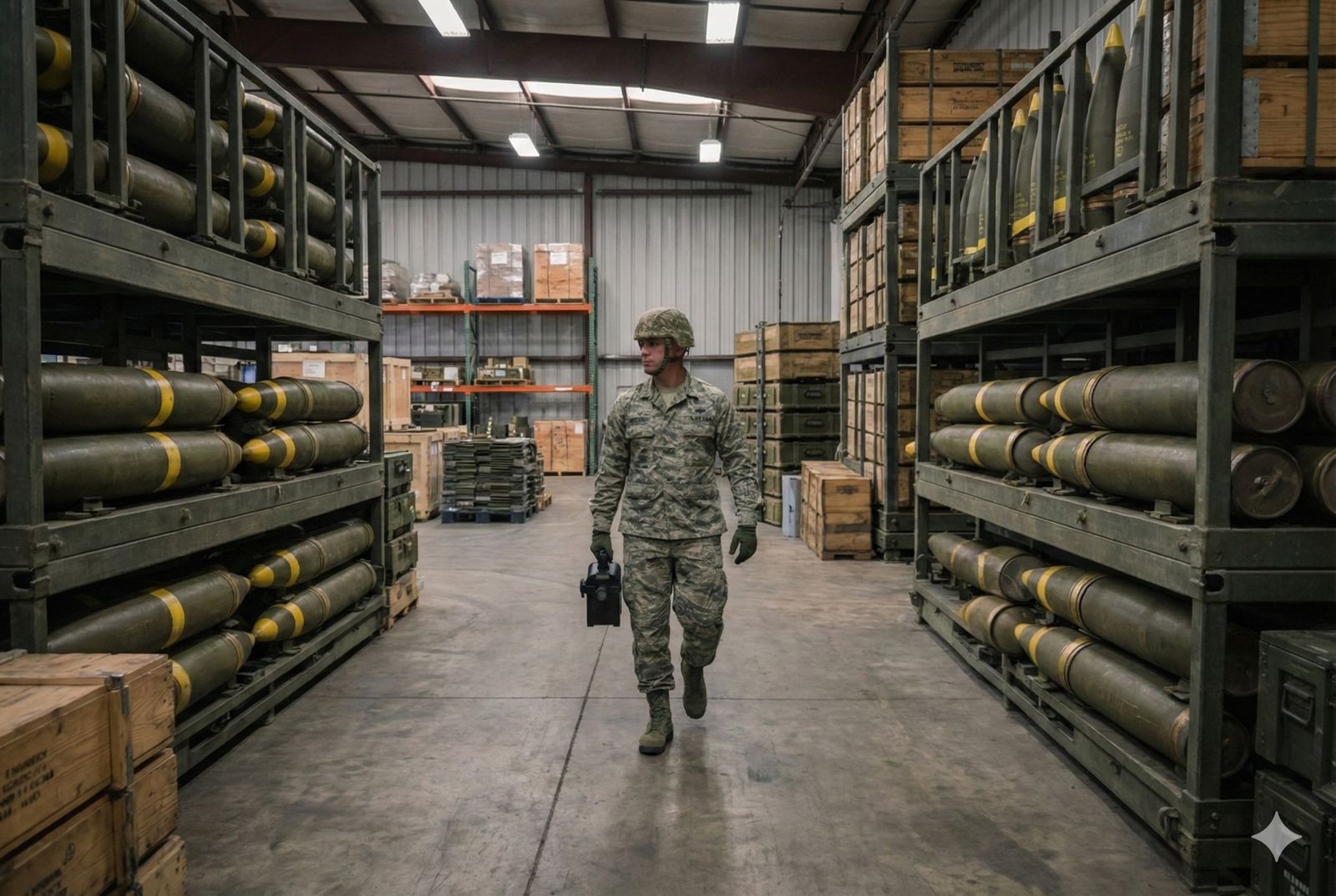
Storage Inspections
Scheduled facility assessments
Pre-Handling
Verification before operations
Transport Events
Before and after movement
Extended Storage
Prior to disposal or long-term
AACTS 3000 Analyzer
The AACTS 3000 Analyzer employs Axial Ion Mobility Spectrometry (AIMS) for sensitive detection of stabilizer's chemical degradation indicators in air samples.
Technical Specifications
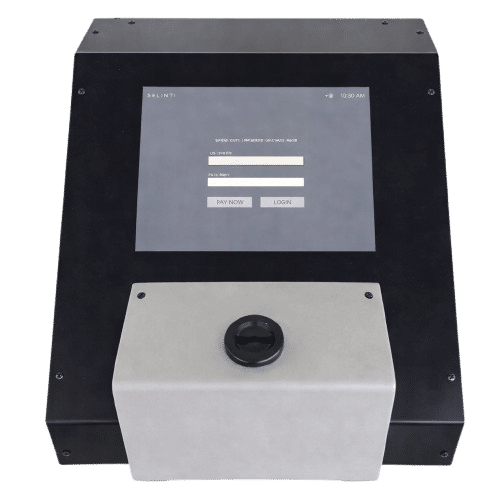
AACTS 3000 Analyzer
For chemical analysis of stabilizer's degradation indicators in energetic materials.
Contact
Get in touch with our team
Canada Ordnance Safety
This website describes operational capabilities and safety support practices.